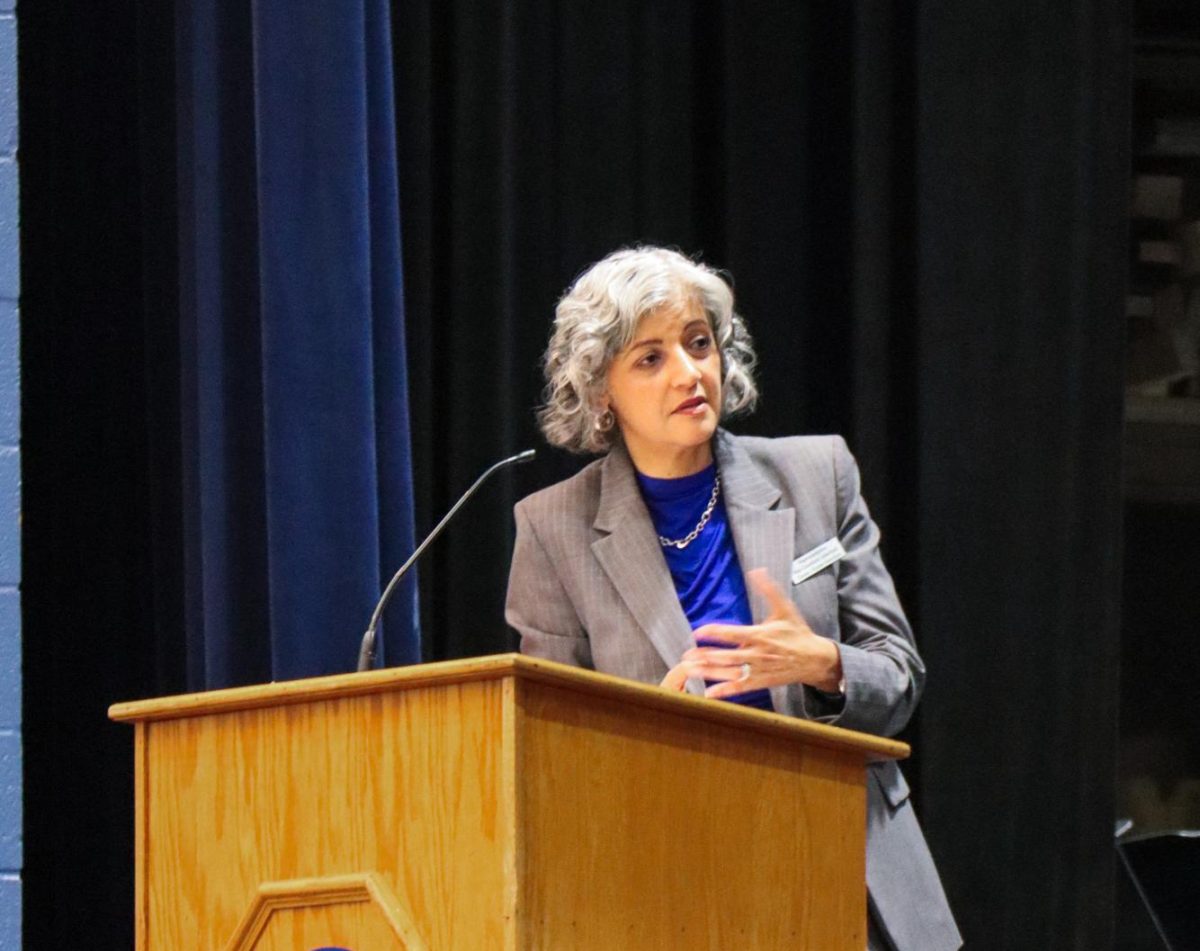
On Tuesday, June 2 the Secretary of Education, Linda McMahon, visited the Center for Technology Essex as a part of her Returning Education to the States Tour.
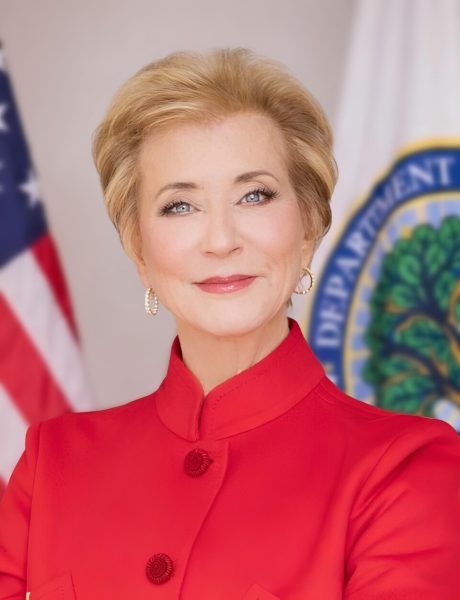
According to the U.S. Department of Education, The Returning Education to the States Tour is a nationwide tour throughout the 50 states of America. Its overall stated purpose is to gather best practices of learning and teaching and expand school choice.
During her visit, McMahon toured CTE’s facilities and learned about the programs offered to students. EWSD School Board Co-Chair, Robert Carpenter, said that the district welcomed the opportunity to showcase its facilities and programs.
“We are always ready to provide tours of our CTE program to interested members of the public, including local, state, and federal officials,” Carpenter said.
“While this brief tour is being conducted in the same way as any other request to learn about our facilities and programs, we look forward to highlighting the success of the EWSD CTE program within the greater context of the excellence and best practices modeled by Vermont CTE and Vermont public education as a whole.”
Carpenter also emphasized the district’s pride in its educational community.
“I was so impressed with the students and staff who were able to showcase how impactful CTE is and how strong public education is in Vermont,” Carpenter added.
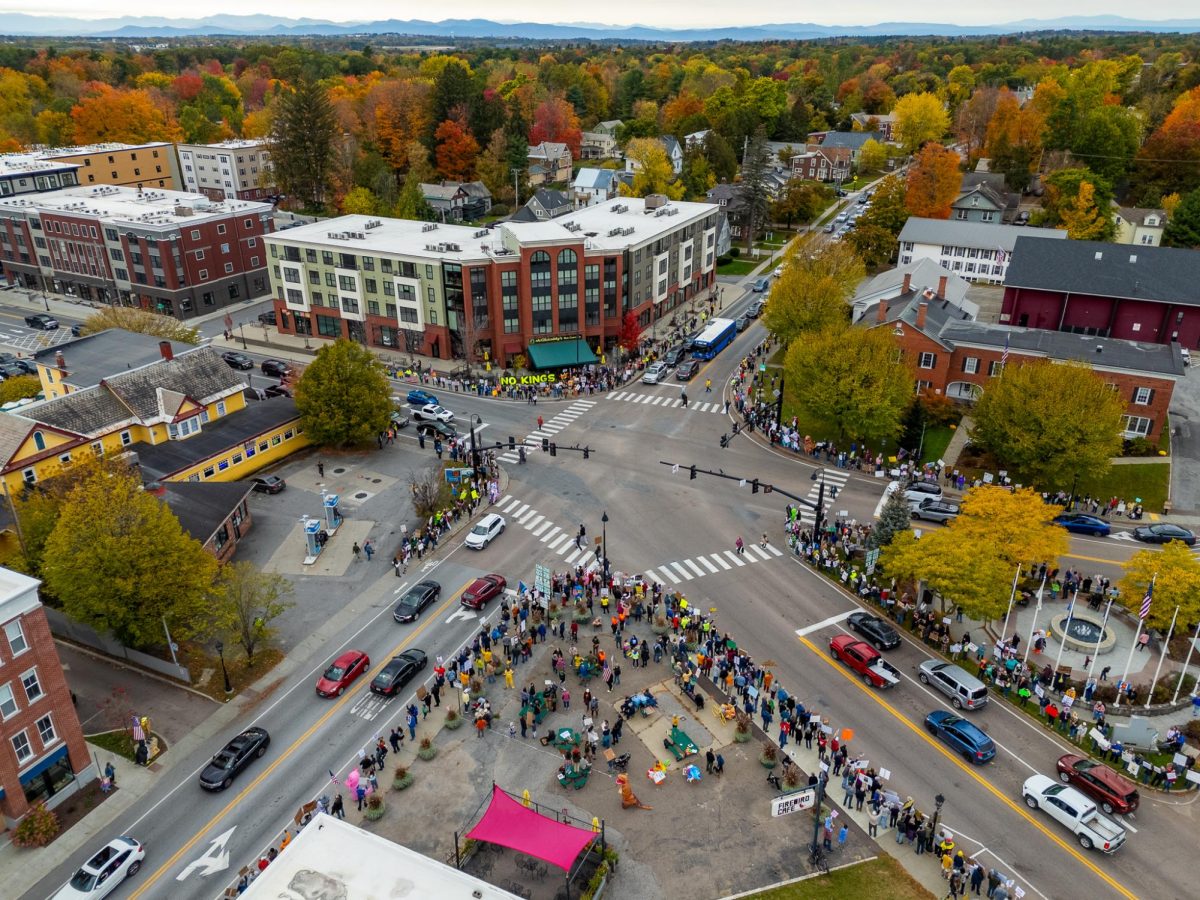
This visit from McMahon prompted four groups to arrange a walkout and protest to express their views and opinions: EHS Student Justice Union, Party for Socialism and Liberation, Green Mountain Democratic Socialist of America, and 50501 Vermont.
Junior and 2026/2027 school year Vice President, Hallie Corneau attended the protest because she doesn’t believe that McMahon’s ideas align with EHS values.
“She is anti trans, queer, people of color, and is an AI pusher,” Corneau said. “She is pushing for abolishing systems that are vital for our school systems like DEI and wants more money to go to trade schools.”
Freshman, Xander LeGrand also attended the protest.
“When I see things like what this administration is doing like cutting funding to education and the impact on my community, it unsettles me and makes me want to take action for my community,” LeGrand said.
Sophomore Kanchan Pradhan, a member of SJU, attended the protest because she opposes efforts to dismantle the Department of Education at the federal level.
“People were also protesting against cuts to programs, to special education, public education as a whole and diversity/equity work,” Pradhan said.
She also shared that students were not the only protesters. 
“It was great to see so many students, community members, and even teachers out there fighting for issues which would affect us directly.”
History teacher Ben Drew, shared a teacher perspective on the walkout and protest.
“I was not sure what the protest was focused on specifically. I’ve heard it was against AI in schools, McMahon’s educational policies, and against the Trump administration in general,” Drew said. “I would say any time anyone is protesting something, a clear narrative that is broadly communicated probably makes the protest more effective. This takes time and organization.”
Drew believes that a demonstration gets its power by showing people that one is willing to take the consequences of demonstration because the issue is more important.
“If a student is worried about what their teachers or peers think of them when they skip class to go to a protest, clearly the issue is less important than their reputation,” Drew said. “If they are willing to stake their reputation on an issue and take the consequences of not following the rules, that shows the strength of their convictions.”
Drew also discussed the consideration that teachers take if they want to participate in a protest.
“Teachers can do whatever they want,” he said. “Protesting is a form of free speech, but your right to free speech doesn’t protect you from being fired.”