It’s that time of year again—winter seasons are in full swing, and teams are gearing up for their respective mid-seasons. For Essex Nordic Skiing, this period is known for the beginning of the countdown to the Cochran’s hill climb.
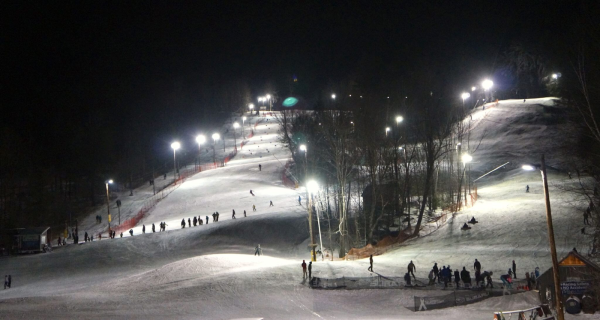
The hill climb has been a tradition within Vermont’s D1 High School Nordic program for many years, once a leg of the three-leg Tour De Chittenden and later Tour De Chad, but is now a standalone race known for its difficulty and unique course. In it, racers ski over 1km up the hill, conquering 400ft of vertical incline. It is widely regarded as one of the more difficult races within the three month season, and often demands the most physical and mental ability out of skiers.
Ruthie Knox is a junior at Essex and the leading skier for the Essex Nordic Girl’s Team.
“It’s all uphill,” Knox said. “You know what you’re expecting, which is hard, because sometimes not knowing what you’re expecting makes [races] a little easier.”
It is true—apart from a small slalom at the base of the hill, the entire race is uphill until the finish line is crossed, making the finish line within view from the start. Another Essex skier and senior Patrick Hess, however, views the hill climb in a more positive light.
“The Cochran’s hill climb is definitely a physical challenge but is much more of a mental challenge,” Hess said. “Once you get to the top and catch your breath, though, you can turn around and see the beautiful Vermont views.”
Hill climb times vary largely to other nordic races, which are often 5km in length and require effective pacing to perform well. In 5km freestyle, top racers often finish from 13-16 minutes, which largely contrasts the hill climb’s 1k freestyle course in which top racers finish 5-7 minutes, which equates to a 27-34 minute 5k at the same pace. 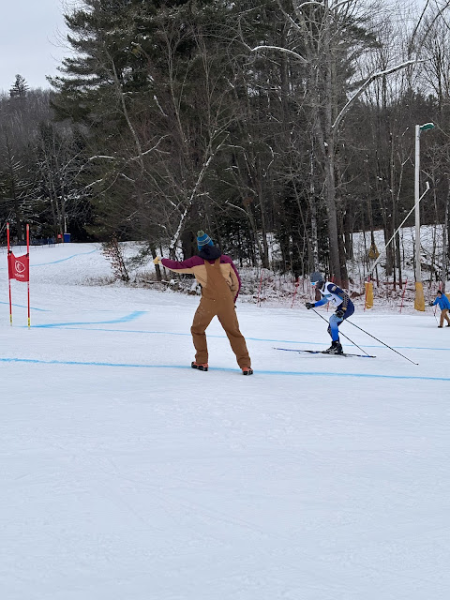
EHS Nordic alum Elliot Riggen recalls his time racing the hill climb similarly to the rest of the team.
“When you cross the finish line, the only way to put it is you feel like you’re dying,” Riggen said. “Your muscles are in oxygen debt, causing tunnel vision, and usually makes your legs give out.”
The narrative is the same for most racers—a wave of pain and misery followed shortly after by a feeling of fulfillment and pride. Knox agrees that the pain is worth it in the end.
“Maybe for the first two minutes it doesn’t feel rewarding,” Knox said. “But after that, when you get to walk down the hill and you’re watching everyone else still climbing up, it’s one of the best feelings out there.”
Riggen, who has raced the hill climb four times total, seconds this statement.

“After a few minutes of recovery, when you look down at the course you just raced up then out at the view, you’re met with an incredible sense of confidence and euphoria,” Riggen said. “For a moment, it feels like you can do anything.”