
On Wednesday, November 5th, Essex Westford School District sent out an email announcing that, due to a broken pipe adapter, Essex High School would be without heat for the day. These emails have continued over the past few days, providing updates to students and staff as the school’s time without heat continues.
“The parts needed to fix the pipe adapter were scheduled to arrive today, but didn’t, which will push the work back another day,” said Essex Westford via email. “We encourage students and staff to dress in layers to stay comfortable.”
There is yet to be a definitive date set for the return of heat to Essex High School.
Garry Scott, Director of Facilities and District Safety at EHS, has been working diligently with his team to resolve the issue as soon as possible. His team worked through the night of Tuesday, Nov 4th, when the two pipe adapters burst; not one pipe, as was stated in the email sent from EWSD.
Scott shared that the heating system was built in 1969. Although there were minor boiler room upgrades in 2024, being over 55 years old, the pipe adapters are quite hard to find replacements for. Two replacements were located in Chicago and Florida, and one has arrived on the EHS campus as of this afternoon.
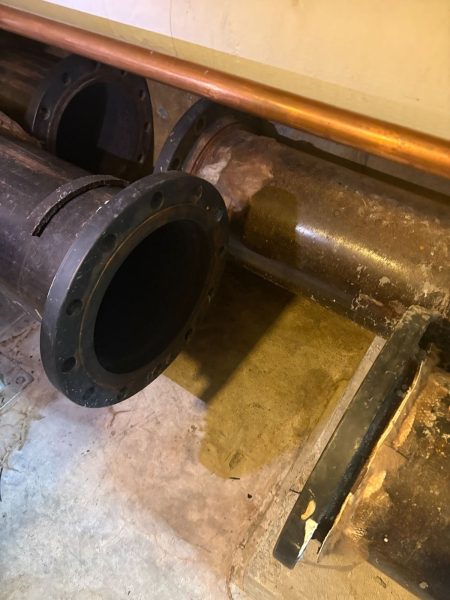
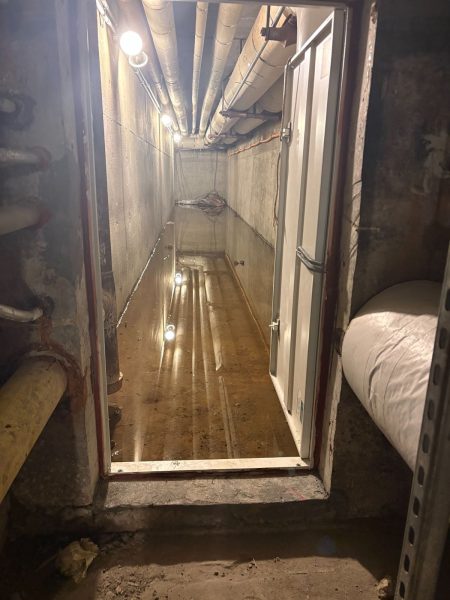
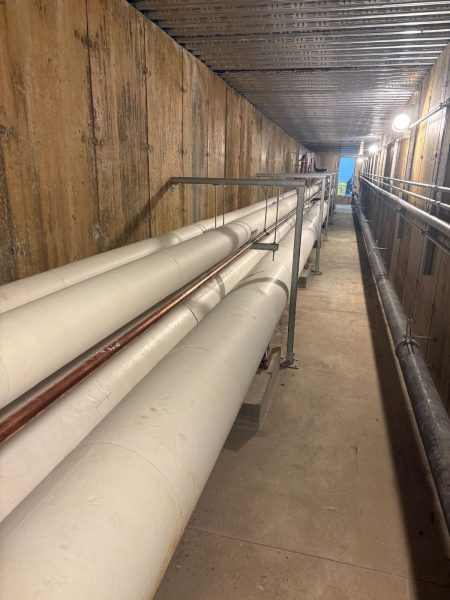
Pictured left to right: empty spots where the two burst pipe adapters go, leftover flooding from the water of the two burst pipe adapters, pipe room that connects to the boilers.
When asked about a timeline for when the heating issue would be resolved, Scott said that once both pipe adapters come in, it will take four hours to replace them, and then another four hours for the air to circulate into the building. The system is delicate, and it will be a slow process to ensure another pipe adapter doesn’t burst due to the new pressure of the boilers being turned back on.
“We are just gonna have more of these problems,” Scott said.
Outdated heating systems are common among schools nationwide. A 2020 Government Accountability Office report found that 41% of districts need to update or replace heating, ventilation, and air conditioning systems (HVACS) in at least half of their schools. With the high school’s current situation, it’s hard not to believe that our school might need more than just new pipe adapters.
Scott shared that an average of below 60 degrees within the school would most likely result in canceling classes. Typically, the school has a temperature average of 67 degrees.
On Friday morning, Karl Yando, EHS physics teacher, measured the temperature in his upstairs classroom using a temperature probe. It read a low of 56.4 degrees. The highest temperature in the school that was measured on the probe was 63 degrees, making the average temperature measured on the probe 59.7 degrees.
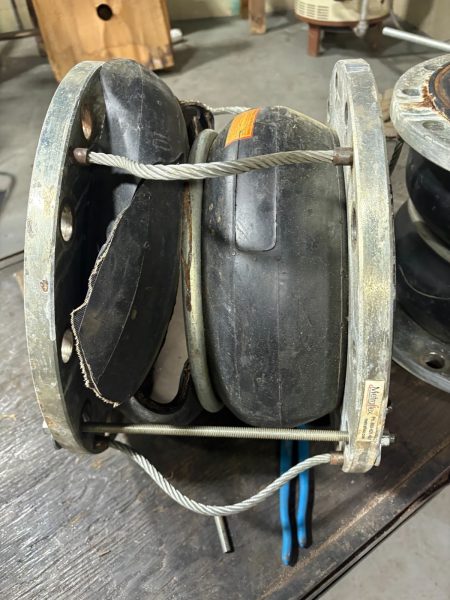
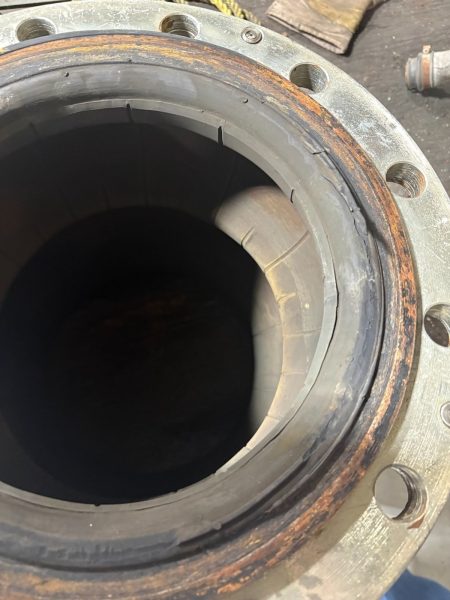
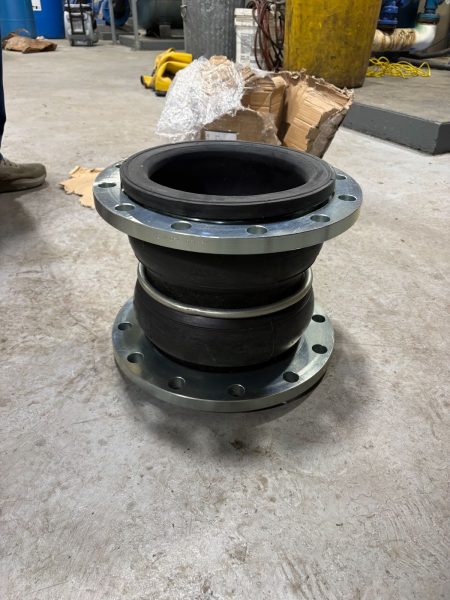
Pictured left to right: first burst pipe adapter, rust on second burst pipe adapter, new pipe adapter that arrived Friday afternoon.
Emma Grattan, a Center for Technology (CTE) student, shared that preschool students attending CTE’s day care program have not been allowed to attend since Wednesday, Nov. 5th, due to the unsafe temperatures.
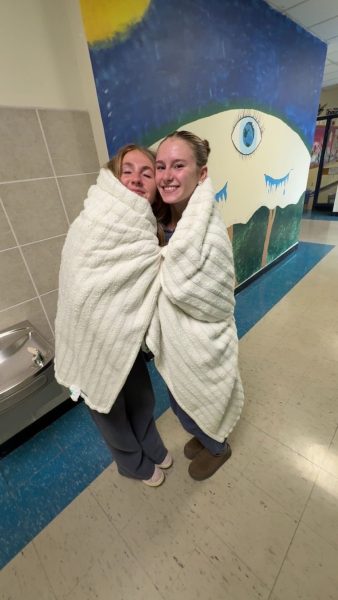
Unlike the preschoolers, high school students are still expected to attend school without heat. Students are finding creative ways to stay warm as they wait for the heat to return.
Molly Gilbert, EHS Junior, sent a photo of her and Abigail Jackman, EHS Junior, in a blanket to the Hive.
“You gotta do what you gotta do,” Gilbert said.
Zoe Papasheraphim, EHS Senior, also shared a photo with the Hive of her friends and herself bundled up due to the cold.
“I’m cold,” Papaseraphim said. “I should be able to be at a stable temperature in order to learn.”